

Your cart is empty
Start shopping to add items to your cart
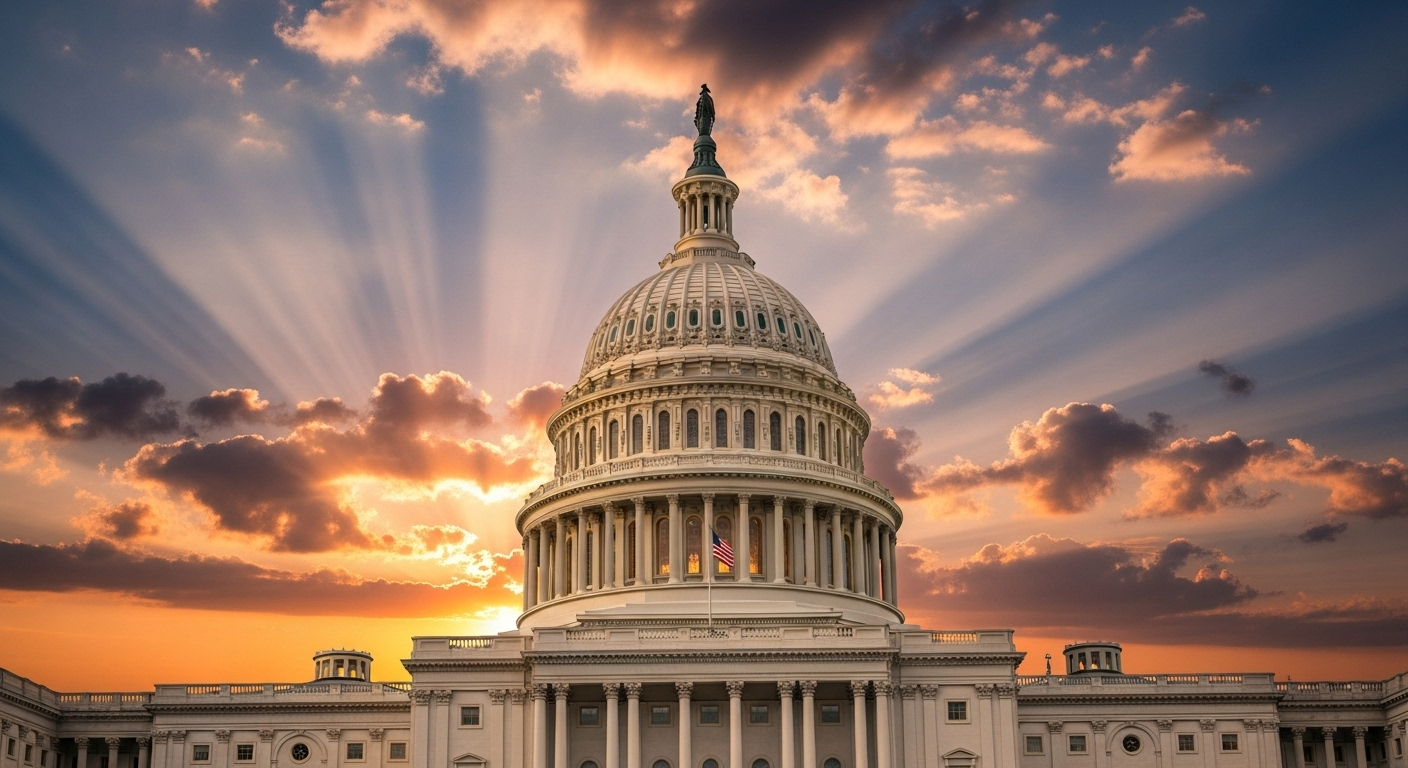
Control of Congress, Key Senate Races, and the Issues That Will Define the Next Two Years
Jordan Lee
Conservative Contributor
November 3, 2026. That's the date that will shape the second half of this presidency and set the table for 2028. Every seat in the House of Representatives, 33 Senate seats, 36 governorships, and thousands of state legislative seats are up for grabs. If you think midterms don't matter, you haven't been paying attention.
Midterm elections are often treated as an afterthought — a referendum on the president's party with lower turnout and less drama. But 2026 is different. The margins are razor-thin, the issues are existential, and the outcome will determine whether the next two years are defined by action or gridlock. Here's what's actually at stake.
All 435 House seats are on the ballot. Right now, the chamber is divided by one of the slimmest margins in American history — a handful of seats separating the majority from the minority. That means a shift of just 5-10 seats could flip control entirely.
Why does that matter? The majority party controls the legislative agenda, committee chairmanships, subpoena power, and what bills even get a vote. If you care about immigration reform, spending cuts, energy policy, or government accountability, the House majority is the gatekeeper. Flip the House, and you flip the agenda.
The 2026 House map features competitive races in suburban districts across Pennsylvania, Michigan, Arizona, Georgia, New York, and California. These are races that will be decided by tens of thousands of votes — sometimes fewer. Check our victory margins tool to see how close your district is.
33 Senate seats are up in 2026, and the battle for the majority is real. Republicans are defending seats in states that could swing either way, while Democrats are protecting incumbents in territory that has shifted in recent cycles. The Senate confirms federal judges, cabinet nominees, and treaties — the majority party holds the keys to the judiciary for a generation.
Key races to watch:
• North Carolina — An open seat in a state that has been decided by margins under 3% in the last three cycles. Turnout in the Triangle and Charlotte suburbs will decide this.
• Maine — A perennial battleground where independent and moderate voters hold outsized influence. The incumbent is a target, and the race is expected to be among the most expensive in the country.
• Georgia — Another race that could go to a runoff. Georgia has become the poster child for "every vote counts," with Senate control decided here in 2021 by a margin of less than 1%.
• Ohio — A working-class state that has trended red but still features competitive statewide races. Union households and rural voters are the swing.
• Wisconsin — Always close, always expensive, always decided by Milwaukee turnout. This race could determine Senate control.
For a deeper dive on the marquee Senate races, read our 2026 Senate races to watch guide.

Governors don't get the headlines, but they veto bills, set budgets, appoint agency heads, and control disaster response. In 2026, 36 states will elect a governor — including major states like California, Texas, Florida, New York, Pennsylvania, and Michigan.
More importantly, governors in 2030 will control the redistricting process that draws congressional maps for the next decade. Whoever wins the governor's mansions in 2026 will shape the House map through 2032. That's not a side note — that's the long game.
Pay special attention to:
• Georgia — Open seat, both parties spending heavily, outcome will influence 2028 presidential positioning.
• Michigan — A pure toss-up in a state that has flipped between parties in the last three gubernatorial cycles.
• Arizona — Border politics, election integrity disputes, and a fast-growing electorate make this a national bellwether.
• Wisconsin — The governor's mansion here has flipped in every midterm since 2010. Pure swing.
Here's the part most people miss: roughly 85% of the laws that affect your daily life are passed at the state level. Abortion access, gun laws, school curricula, tax rates, voting rules, healthcare policy, criminal justice reform — these are largely state decisions. And in 2026, over 6,000 state legislative seats are on the ballot.
A handful of votes can flip a state chamber. We've seen races decided by literally single digits. If you've ever wondered why your state banned something you didn't vote on, or passed a law you hate — it's because state legislative elections have turnout around 30-40%. The people who show up decide everything.
Want to know how competitive your state legislature races are? Find your state page for a breakdown of every race on your ballot.
Every midterm has a set of issues that dominate. In 2026, these are the ones shaping the battleground:
1. The Economy and Inflation. After years of price spikes, voters are still feeling the pinch on groceries, housing, and energy. The party that owns the economy will win or lose the suburbs.
2. Immigration and the Border. Border-state governors and House members in swing districts face direct pressure. Expect this to be the single most polarizing issue on the ballot.
3. Abortion Access. Since the Dobbs decision, state-level abortion policy has become a turnout driver — for both sides. State legislatures and governorships are where abortion access is actually decided, and 2026 is the first full post-Dobbs midterm cycle.
4. Election Integrity and Voting Rules. State legislators set the rules for future elections — ID requirements, mail voting, early voting windows, drop boxes. Who wins in 2026 will shape how 2028 is run.
5. Crime and Public Safety. District attorney races and state legislative races will decide whether your area pursues tough-on-crime policies or progressive reform. Both are on the ballot.
6. Education and Parents' Rights. School board and state superintendent races have become national flashpoints. Curriculum, parental notification, and school choice are all on the table.

Presidential elections come down to 6-7 swing states. Midterms are broader — but the same states tend to be decisive. Watch:
• Pennsylvania — Senate race, multiple House races, and the legislature are all competitive.
• Michigan — Open Senate seat, governor's race, and a legislature that flipped in 2022.
• Wisconsin — Senate, governor, and a state Supreme Court that has become a national proxy fight.
• Arizona — Senate, governor, and the entire state government are in play.
• Georgia — Senate, governor, and a legislature that has passed major voting law changes.
• Nevada — Senate and a legislature that has swung back and forth in recent cycles.
• New Hampshire — Small state, huge impact on Senate control, and a legislature that famously flips every cycle.
Here's the brutal truth: midterm turnout in the U.S. is typically around 40% of eligible voters. That means 6 in 10 people stay home. In off-year and local elections, it drops to 15-25%. The people who do show up decide who runs your schools, your courts, your state, and — because of gerrymandering — often your congressional district for a decade.
If you're under 30, your turnout is even lower — historically around 20% in midterms. Politicians know this. They write policy for the people who vote. If young people voted at the rate retirees do, every issue you care about — climate, housing, student loans, gun policy — would look different.
That's not a talking point. That's math. See the historical turnout data to understand how we got here.
"Midterm elections are where the actual governing majority is built. Skip them, and you're letting someone else draw the map for the next decade."
The election is November 3, 2026, but the work starts now. Here's your action plan:
1. Check your registration. Registrations get purged. Verify you're active, then verify again before your state's deadline.
2. Know your deadlines. Registration deadlines vary by state and can be as early as 30 days before Election Day. Use our deadline tracker.
3. Decide how you'll vote. Early voting, mail-in, or Election Day — pick now and put it on your calendar. Use our state-by-state voting guide to find your options.
4. Research your ballot. Federal races get the attention, but state and local races affect you more. Look up a sample ballot for your state and research every race.
5. Get 5 friends to vote. Text them. Drive them. Make it a group thing. Peer pressure for democracy works.
6. Support the work. Donate to ShowUpOrShutUp or grab something from the shop — every purchase funds free voter tools for all 50 states.
The 2026 midterms are not a warmup for 2028. They are the election. Control of Congress, the Senate, 36 governorships, thousands of state legislative seats, and the direction of policy on every issue you care about — all decided on November 3, 2026.
The margins will be small. The turnout will decide it. Show up or shut up. The people who don't vote don't get to complain about what happens next.
November 3, 2026. Be there.
Show Up or Shut Up — the uniform for people who actually participate.
Shop the GearJoin our newsletter for weekly culture war updates, conservative commentary, and truth bombs the woke mob doesn't want you to see.
Want to go deeper? These books cover the ideas behind this article. We earn a small commission if you buy through these links — at no extra cost to you.
Congress threatens another shutdown over the same budget fights they have every October. It's not about fiscal responsibility—it's political theater.

Congressional elections aren't just about domestic policy. Officials you elect will shape defense spending, China policy, and cybersecurity for years to come.
You vote in November but you can't name the three branches. That's not a personal failing — that's by design. Here's how the federal government actually works in 5 minutes.
Make a statement at the polls. Every purchase funds more voter guides and tools like this one.
Shop the Cause →Get the exact deadlines, ID rules, and key races for the state where you\'re registered to vote.
See All 50 States