

Your cart is empty
Start shopping to add items to your cart

Registration, Early Voting, Mail-In Ballots, and ID Rules for All 50 States
Jordan Lee
Conservative Contributor
Voting rules are different in every state. Some let you register online in 5 minutes, others require paper forms. Some mail every voter a ballot automatically, others demand a photo ID at the polls. There is no single federal voting system — it's 50 different systems, and you need to know yours.
This guide breaks down the four things that matter most — registration, early voting, mail-in voting, and voter ID — and tells you where to find the exact rules for your state. The 2026 midterms are November 3, 2026, and your deadline to act may be weeks earlier.
Before anything else, you need to be registered. Registrations get purged more often than people realize — if you've moved, changed your name, or haven't voted in a few cycles, you may be inactive. Start by checking your registration status with our 30-second registration check tool.
If you're not registered, here's what you need to know:
Online registration: 42 states and DC offer online voter registration. If your state is on this list, it takes about 5 minutes — you'll need a state ID or driver's license number and the last 4 digits of your SSN.
Paper registration: The remaining states require a paper form, available at your local election office, DMV, or public libraries. You can also download the federal form (the National Mail Voter Registration Form) and mail it in.
Same-day registration: 24 states and DC allow you to register and vote on the same day — including on Election Day. If you missed your state's regular deadline, this is your safety net. Bring proof of residence (a utility bill, bank statement, or lease works).
Registration deadlines: Most states close registration 15-30 days before Election Day. A few states (like North Dakota) don't require registration at all. See every state's deadline and mark yours on the calendar now.
You generally have three options: vote early in person, vote by mail, or vote on Election Day at your polling place. Most states offer at least two of these — many offer all three. Pick the one that fits your life and commit to it.
Early voting lets you cast your ballot in person before Election Day. It's available in 47 states and DC, with windows ranging from 3 to 45 days before the election. You show up at a designated early voting location, check in, and vote — same process as Election Day, but with shorter lines and more flexibility.
Why early voting is the move:
• Shorter lines — often no wait at all.
• You can vote on your schedule, not just on a Tuesday.
• If something goes wrong (wrong polling place, ID issue), you have time to fix it before Election Day.
• If you're traveling, sick, or working on November 3, you're not scrambling.
Mail-in voting (sometimes called absentee voting) lets you receive your ballot in the mail, fill it out at home, and return it by mail or at a drop box. Eight states — Colorado, Hawaii, Nevada, Oregon, Utah, Washington, California, and Vermont — mail every registered voter a ballot automatically. You don't have to request anything.
In the other states, you have to request an absentee ballot. Some require a reason (illness, travel, disability, work); many are "no-excuse" — anyone can request one. Request deadlines and return deadlines vary, so check your state page for the specifics.
Mail-in ballot rules to follow exactly:
• Sign the return envelope — your signature is matched against your registration. A mismatch is the #1 reason mail ballots get rejected.
• Use the inner secrecy envelope if your state requires one. Forgetting it voids your ballot in some states.
• Return it on time. Some states require it to be received by Election Day; others require it to be postmarked by Election Day. Know your rule.
• Track your ballot. Most states offer online ballot tracking — use it to confirm your ballot was received and counted.
The traditional way. Polls are open on November 3, 2026, from early morning to evening (typically 7am-7pm, but varies by state). If you're in line when polls close, you have the right to vote — stay in line. Find your polling place with our polling place finder.

Voter ID laws are the most state-dependent part of voting. Here's the breakdown:
Strict photo ID required: States like Georgia, Indiana, Kansas, Mississippi, Tennessee, Texas, and Wisconsin require a photo ID to vote in person. Acceptable IDs typically include a driver's license, state ID, passport, or military ID. Check your state's accepted IDs with our voter ID lookup tool.
Non-strict photo ID: States like Florida, Idaho, and Arizona ask for photo ID but may let you sign an affidavit or cast a provisional ballot if you don't have one.
Non-photo ID required: States like Colorado, Connecticut, and Delaware accept documents like a utility bill, bank statement, or paycheck as proof of identity.
No ID required (typically): States like California, New York, Illinois, and Oregon generally don't require ID if your signature matches your registration. (Some ask for ID the first time you vote after registering by mail.)
Best practice: Bring ID even if your state doesn't require it. It speeds up the process and prevents any dispute at the polls.
This guide covers the framework, but the details matter. Voting rules change — sometimes months before an election. Always verify the current rules for your state. We maintain a state-by-state voting guide with the latest rules, deadlines, and links for every state.
A few state-specific notes for 2026:
• California — All-mail ballot state. Every registered voter gets a ballot by mail. You can still vote in person early or on Election Day. Same-day registration available.
• Texas — Strict photo ID required. Early voting runs about two weeks. No-excuse absentee voting is not available — you need a qualifying reason (age 65+, disability, out of county, jail confinement).
• Florida — Photo ID required. Mail ballots must be requested for each election cycle (not automatic). Return deadline: received by 7pm Election Day.
• New York — Early voting runs 9 days. No-excuse absentee voting. Online registration available with a NY DMV ID.
• Pennsylvania — No-excuse mail voting, but you must request a ballot each cycle. ID required for first-time voters. Ballot must be received by 8pm Election Day.
• Georgia — Strict photo ID. Early voting mandatory 17 days. No-excuse absentee, but you must request it.
• North Carolina — Photo ID required. Early voting about 17 days. Same-day registration available during early voting only.
• Michigan — No-excuse absentee, and you can sign up to automatically receive a mail ballot every election. Same-day registration available.
• Arizona — Mail ballot state (you join a Permanent Early Voting List). Photo ID required at the polls.
• Wisconsin — Strict photo ID. Early voting windows set by each municipality. Absentee requires an excuse OR a "indefinitely confined" status.
The #1 reason people don't vote isn't apathy — it's that they don't have a plan and life gets in the way. So make a plan now:
Can I vote if I have a felony conviction? In most states, yes — once you've completed your sentence. Maine, Vermont, and DC never lose your right to vote. Check your state page for the exact rule.
What if I'm a student voting in a different state? You can vote in the state where you're a resident. If you go to school out of state, you can usually choose to vote absentee in your home state or establish residency and vote locally. Check both states' rules.
What if I'm in the military or living overseas? You can vote absentee under UOCAVA. Request your ballot through FVAP.gov. You must request it each year.
What if I'm homeless? You can still register. Most states accept a shelter address, a place where you regularly stay, or a crossroads as your address. Contact your local election office for help.
What if someone challenges my right to vote? Poll watchers can challenge voters in some states. If challenged, you may need to cast a provisional ballot or sign an affidavit. Poll workers can help — ask them.
Your vote matters. Your influence matters more. If you can get 5, 10, or 20 people to vote who otherwise wouldn't, you've multiplied your impact. Text your contacts. Offer rides to the polls. Post about it. Normalize voting — especially in midterms.
Support the work: donate to ShowUpOrShutUp or grab a shirt or hat from the shop. Every purchase funds free voter tools for all 50 states — no paywall, no data collection, no account required.
Voting is not complicated — but it does require you to take action, and the rules are different everywhere. Register. Pick how you'll vote. Bring the right ID. Show up. The 2026 midterms will shape the country for years. If you don't vote, you're letting someone else make those decisions for you.
The tools are right here. The information is right here. The only thing missing is you showing up.
Show up or shut up. November 3, 2026. Be there.
Show Up or Shut Up — the uniform for people who actually participate.
Shop the GearJoin our newsletter for weekly culture war updates, conservative commentary, and truth bombs the woke mob doesn't want you to see.
Want to go deeper? These books cover the ideas behind this article. We earn a small commission if you buy through these links — at no extra cost to you.
First time voting? It’s not as scary as it looks—but there are a few things they don’t teach you in school. From what to bring to what NOT to bring, here’s your no-BS survival guide for election day.

If you don't know whether you're registered, you're not registered. Here's how to check, register, and fix it — in every state, in under two minutes. No excuses.
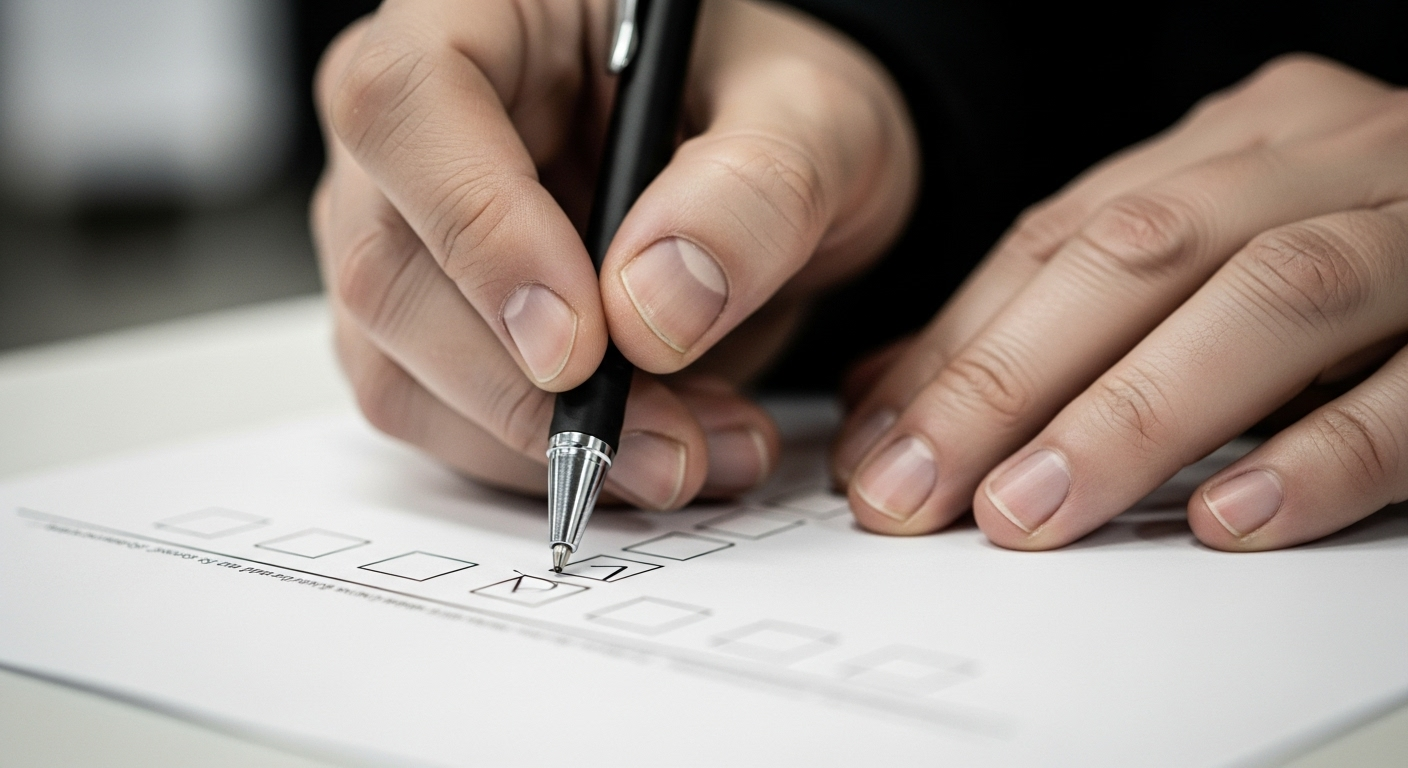
Some states need photo ID. Some accept utility bills. Some accept nothing and you walk in. Show up on Election Day with the wrong documents and you might as well not have come. Here's the cheat sheet.
Make a statement at the polls. Every purchase funds more voter guides and tools like this one.
Shop the Cause →Get the exact deadlines, ID rules, and key races for the state where you\'re registered to vote.
See All 50 States