

Your cart is empty
Start shopping to add items to your cart
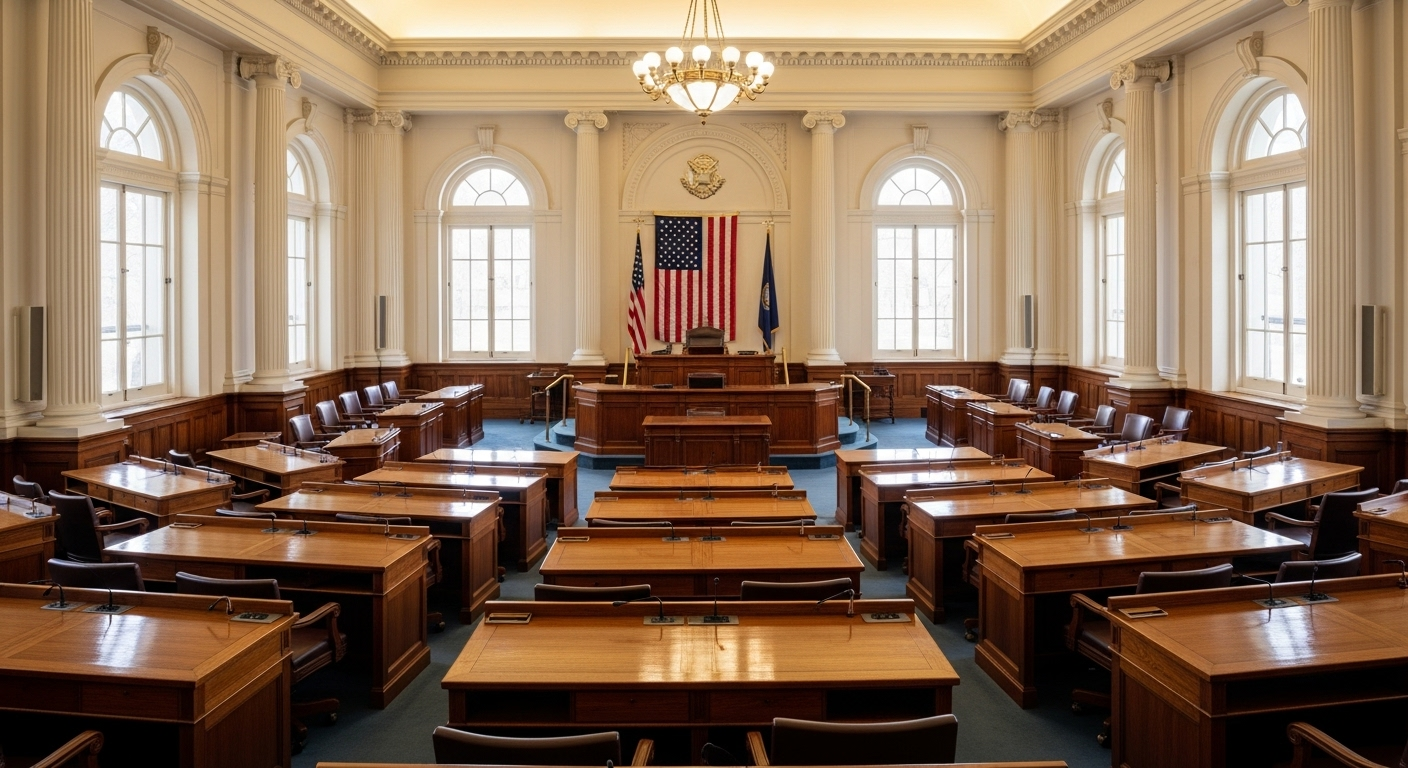
The Seats That Will Decide Control of the Senate
Taylor Brooks
Conservative Contributor
The 2026 midterms aren't just another election — they're the battle for control of the United States Senate. And the map is brutal for Democrats. Of the 33 Senate seats up for grabs in 2026, 20 are held by Republicans and only 13 by Democrats. But that's not the full story. Several of those Democratic seats are in deep-red states, and a couple of Republican seats could be competitive too.
Here's the reality: Republicans currently hold 53 seats. To reach the 60-vote supermajority needed to break filibusters, they'd need a near-impossible sweep. But to lock in a durable majority that can confirm judges, pass legislation, and block the Democratic agenda, they need to hold their own and pick off a few Democratic incumbents in hostile territory.
If you care about the direction of this country, these are the races that will decide it. And if you live in one of these states, your vote has more power than almost anyone else in America.
"Control of the Senate in 2027 won't be decided in Washington — it'll be decided in states where fewer than a million votes could flip the balance of power."
These are the races where Democrats are playing defense. Each one is a pickup opportunity for Republicans, and each one could flip the Senate math.
Sherrod Brown's retirement in 2024 was the first domino. Ohio has moved steadily red — Trump carried it in 2016 and 2020, and Bernie Moreno won the 2024 Senate race. This is now an open seat in a state that has trended Republican at the federal level. The GOP nominee starts as the favorite, but Democrats will pour resources into turnout in Cleveland, Columbus, and Cincinnati. If you're an Ohio voter, check your state page for registration info and key dates.
Jon Tester barely survived in 2018 and lost in 2024. Montana is now a solidly red state at the federal level — Trump won it by 16 points. With no incumbent, this seat leans strongly Republican. Still, Democrats have deep organizing roots in Montana's tribal communities and college towns. Don't assume it's over until Election Day. Montana voters — make sure you're registered.
Jim Justice won this seat in 2024 after Joe Manchin retired, and it's now Republican. West Virginia is off the board, but it's worth noting because it represents the completed realignment of Appalachia. The Democratic Party has no remaining federal foothold in West Virginia. West Virginia's state page has local election details.
Jon Ossoff won his seat in the 2020–2021 runoff and is up for his first re-election. Georgia is a true purple state — it flipped blue in 2020 then red in 2024. This could be the most expensive race of the cycle. If Republicans recruit a strong candidate, this is a prime pickup opportunity. Georgia voters, expect a barrage of ads and make sure your registration is current with our registration check tool.
New Hampshire is a swing state that has gone back and forth. Shaheen is a seasoned campaigner, but the state's federal delegation has been volatile — it went for Harris in 2020 but Trump in 2024. If Republicans invest here, it could be competitive. New Hampshire's page has everything you need.
Gary Peters announced his retirement, making Michigan an open-seat race in a state that Trump carried in 2024. This is a genuine toss-up. Michigan has a Democratic governor and large union infrastructure, but Trump's 2024 win showed the state is winnable for Republicans. Expect both parties to go all-in here.
Tina Smith announced she won't seek re-election, opening up a seat in a state that has been reliably blue but that Trump came close to winning in 2024. Minnesota hasn't elected a Republican senator since 2002, but open seats change the math. This is a sleeper race that could surprise people.
Republicans are mostly on offense, but a few GOP-held seats could be in play if the political environment shifts:
Maine — Susan Collins. Collins won re-election in 2020 despite the state going blue for Biden. She's a survivor, but Maine's ranked-choice voting system makes every race unpredictable. Democrats will target this seat aggressively.
North Carolina — Thom Tillis. North Carolina is a perennial battleground. Tillis won narrowly in 2020. If Democratic turnout in the Research Triangle and Charlotte is strong, this could tighten. North Carolina voters — this one's on you.
Alaska — Dan Sullivan. Alaska has a ranked-choice voting system and a history of surprising results (Lisa Murkowski's write-in victory in 2010). Sullivan should be safe, but Alaska doesn't follow conventional political logic.
The Senate confirms every federal judge. It approves cabinet secretaries. It ratifies treaties. And with a simple majority, it can pass budget-related legislation through reconciliation — no filibuster required.
If Republicans hold 55+ seats, they can govern effectively even with a narrow House majority. If Democrats hold the line and keep 50+ seats, they can block virtually everything. The margin of control will likely come down to 2-3 races.
Think about that. A few hundred thousand voters in Georgia, Michigan, or New Hampshire could determine whether conservative judges get confirmed for the next six years. Whether spending bills pass or die. Whether the border gets secured or stays open.
If you live in one of the states above, you're not just a voter — you're a deciding voter. Here's what to do:
1. Make sure you're registered. Use our voter registration check tool right now. Registration deadlines are unforgiving — miss yours and you're sitting on the bench while the game is played.
2. Know your deadlines. Registration deadlines vary wildly by state. Some are 30 days before the election, some allow same-day registration. Read our full registration deadline guide to find yours.
3. Volunteer. Call your local party office. Knock doors. Drive people to the polls. Senate races are won on turnout, and turnout is built by volunteers.
4. Spread the word. Share this with everyone you know in these states. Send it to your group chat. Post it. The more people who understand what's at stake, the better the turnout.
5. Support the mission. ShowUpOrShutUp.org is built to get people to the polls. Donate here to help us reach more voters, or grab gear from the shop — every purchase funds voter outreach.
There are roughly 8-10 genuinely competitive Senate races in 2026. Republicans need to win most of them to build a durable majority. Democrats need to hold enough to maintain leverage. The outcome will be decided by turnout in a handful of states.
If you're in Ohio, Georgia, Michigan, New Hampshire, Minnesota, Montana, North Carolina, or Maine — your vote is a lever on national power. Don't waste it. Register. Show up. Vote like the future of the country depends on it — because it does.
Show up or shut up. The Senate is on the line.
Show Up or Shut Up — the uniform for people who actually participate.
Shop the GearJoin our newsletter for weekly culture war updates, conservative commentary, and truth bombs the woke mob doesn't want you to see.
Want to go deeper? These books cover the ideas behind this article. We earn a small commission if you buy through these links — at no extra cost to you.
Control of Congress, state legislatures, and the future of American politics are on the line in 2026. Here's why these midterms will be absolutely wild.
Congress threatens another shutdown over the same budget fights they have every October. It's not about fiscal responsibility—it's political theater.

Congressional elections aren't just about domestic policy. Officials you elect will shape defense spending, China policy, and cybersecurity for years to come.
Make a statement at the polls. Every purchase funds more voter guides and tools like this one.
Shop the Cause →Get the exact deadlines, ID rules, and key races for the state where you\'re registered to vote.
See All 50 States