
Your cart is empty
Start shopping to add items to your cart

The giveaway math and psychology behind registration-drive swag that becomes a billboard instead of a throwaway
Jordan Lee
Conservative Contributor
Every voter registration drive makes the same mistake. They buy the cheapest possible swag — a thousand logo pens, a roll of generic "VOTE" stickers — hand it out, and then wonder why nobody remembers they were there. The giveaway that becomes a throwaway is a wasted budget. The giveaway that becomes a billboard is a turnout multiplier.
Here's the difference, and the math to buy it right.
People keep and wear what signals who they are, not what they oppose. A sticker that says "VOTE" is a command nobody internalizes. A shirt that says "I SHOWED UP" is an identity a person will put on their body and defend.
This is why the most successful civic swag is participation-identity, not issue-reminder. The person wearing it becomes the message. When someone carries a "I Voted" sticker on their laptop, they're telling every coworker "I'm the kind of person who votes" — and that's contagious. Identity gets worn. Issues get left in the drawer.
• Stickers ($2-5): The workhorse. Cheap enough to hand to everyone, unisex, travels on laptops and water bottles. A sticker is the handshake — the thing that starts the conversation at your table.
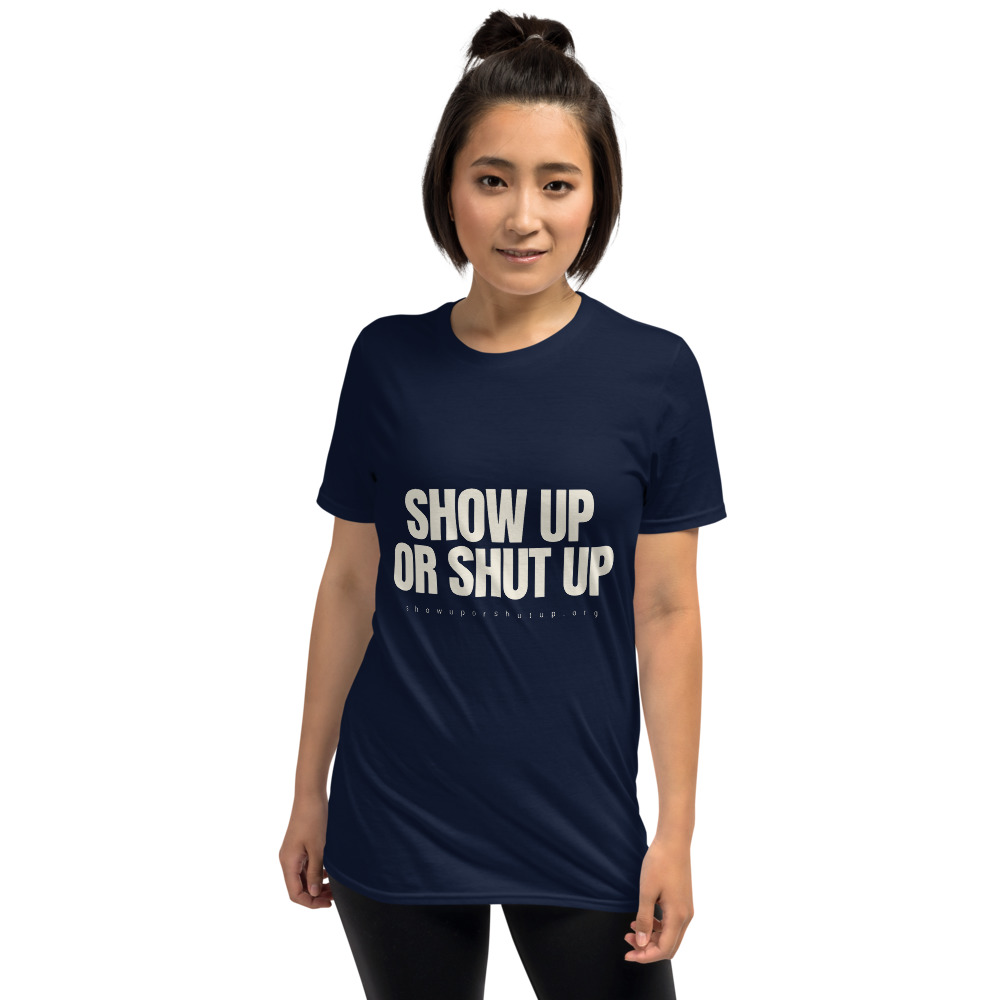
• Tees ($25-35): The reward and the billboard. People who register at your table get a tee, people who donate get a sticker. The tee gets worn on the canvass and beyond — one registered voter in a tee is 100 impressions a week.
• Hats ($25-30): Daily-wear conversation starters for the 40+ crowd. Good for your core volunteers, not for mass giveaways.
Say you've got a $500 drive budget. Here's the math that works:
• $5 sticker: hand one to every person who stops — 100 people gets 100 stickers for ~$500 if stickers are the whole budget. But that's the wrong allocation.
• The right split: ~$300 on 60 tees for the people who actually register, ~$150 on 100+ stickers for the walk-ups, ~$50 on a buffer. Now you've got 60 walking billboards and 100 handshakes.
The mistake is spending the whole budget on giveaways to people who never engage. Spend it on the people who take the step — the ones who register deserve the shirt that keeps working after they walk away.
• One-off event merch. "2026 Spring Festival" gear is dead by August. Buy evergreen accountability merch that works year-round.
• Candidate merch. Dies with the loss, useless across the district. Buy participation identity.
• Cheapest-possible logo swag. A pen nobody keeps isn't marketing, it's litter. Put the budget into fewer, better, wear-able pieces.
• A college group tabling at a campus fair: 200 stickers + 30 tees given to people who register on the spot. Stickers go on laptops, tees on Instagram, both carry into November.
• A county party running a canvass kickoff: 100 tees for canvassers (M/L/XL heavy), stickers for the rally crowd, one shipment to headquarters.
• A nonpartisan coalition at a high-traffic event: 500 stickers + 40 tees, QR code on the tee back linking to a registration/ballot lookup.
The thread: identity merch to the engaged, stickers to the crowd, evergreen not event-specific. Do that and your drive's swag is still working in November.
We make non-candidate accountability merch built for exactly this — tees, stickers, and hats with volume pricing and one-shipment fulfillment for drives and coalitions. Get a bulk quote or see the products in the shop. Every purchase also funds free voter tools for all 50 states.
Show Up or Shut Up — the uniform for people who actually participate.
Shop the GearJoin our newsletter for weekly culture war updates, conservative commentary, and truth bombs the woke mob doesn't want you to see.
Want to go deeper? These books cover the ideas behind this article. We earn a small commission if you buy through these links — at no extra cost to you.

Future presidents and senators start as local officials. State governments control elections and your city council vote today shapes who runs the country.

“My vote doesn’t matter.” “Both parties are the same.” “I don’t have time.” We’ve heard every excuse. Here’s why every single one is wrong—and what you should do instead.

If you don't know whether you're registered, you're not registered. Here's how to check, register, and fix it — in every state, in under two minutes. No excuses.
Make a statement at the polls. Every purchase funds more voter guides and tools like this one.
Shop the Cause →Get the exact deadlines, ID rules, and key races for the state where you\'re registered to vote.
See All 50 StatesIdentity-based participation merch outperforms generic "VOTE" reminders. Stickers ($2-5) are the cheap, unisex workhorse for every person who stops at your table; tees ($25-35) are the reward given to people who register. People keep and wear what signals who they are — not what they oppose.
Spend on the people who take the step, not on everyone who walks by. A $500 budget works best split as roughly $300 on ~60 tees for people who actually register, $150 on 100+ stickers for walk-ups, and $50 on buffer. This turns each registration into a walking billboard instead of a throwaway giveaway.
Avoid one-off event merch (dead after the event), candidate merch (dies with the loss and is district-specific), and cheapest-possible logo items like pens that nobody keeps. Put the budget into fewer, better, wear-able evergreen accountability pieces.
People keep and wear what signals who they are. A sticker that says "VOTE" is a command nobody internalizes; a shirt that says "I SHOWED UP" is an identity a person will wear in public and defend. Identity gets worn — issues get left in the drawer.
Use stickers as the handshake for the crowd and tees as the reward for the engaged. For every tee, order roughly 2-3 stickers. A college group tabling might order 200 stickers and 30 tees; a county party kickoff might order 100 tees and a similar number of stickers for the rally crowd.