

Your cart is empty
Start shopping to add items to your cart

How State and Local Races Shape National Security and the Political Pipeline
Jordan Lee
Conservative Contributor
Everyone obsesses over the presidency. They fight about Congress. They doom-scroll through national political drama. But ask them who their state legislators are, and you get blank stares.
Local and state elections aren't just about potholes and property taxes. They're the farm system for federal power. The officials you elect to your city council today could be your senator in 10 years. Your state legislators draw congressional districts. Your governors appoint senators when vacancies occur.
If you only care about national politics but ignore local races, you're missing where the real power gets built—and who gets to wield it.
"All politics is local." — Tip O'Neill
Where do federal politicians come from? They come from local and state offices.
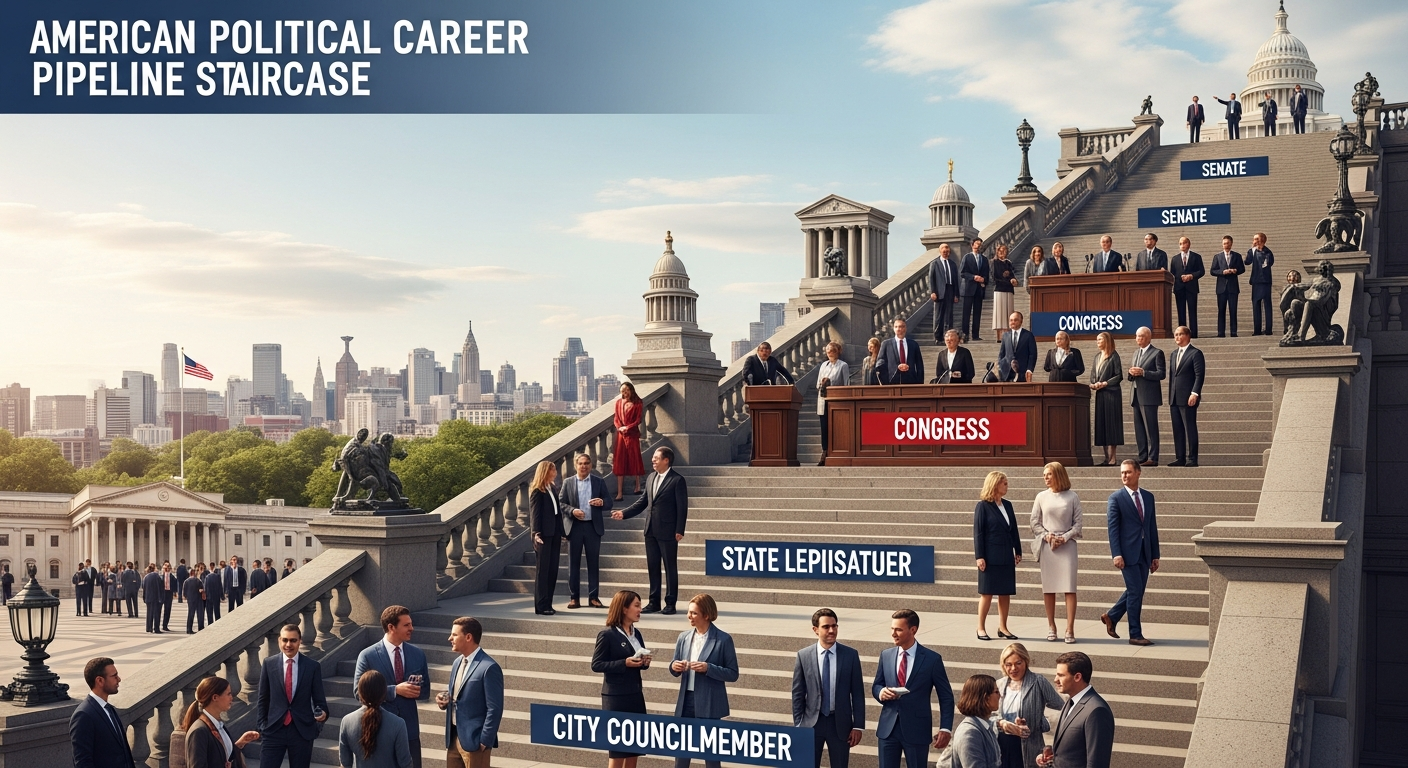
Look at nearly any senator or representative, and you'll find a path that goes something like: city council → state legislature → Congress. Or: school board → county commission → state legislature → Senate. The specifics vary, but the pattern is consistent.
Why? Because politics is about name recognition, fundraising networks, and experience. You build all of these at lower levels before moving up. Nobody starts at the top.
Examples:
• Barack Obama: Illinois state senator before U.S. senator before president
• Marco Rubio: City commissioner → state legislator → U.S. senator
• Alexandria Ocasio-Cortez: Congressional challenger who started in local organizing
• Ron DeSantis: U.S. representative before governor
The point is: if you want to shape who runs the country, you have to shape who rises through the pipeline. And the pipeline starts local.
When you vote in state legislative races, you're not just picking someone to argue about budget line items. You're potentially selecting a future congressional candidate. A future senator. Maybe even a future president. The earlier you intervene in the pipeline, the more influence you have.
Here's something that doesn't get enough attention: states run elections. Not the federal government. States.
Your state legislature decides:
• Voter ID requirements — what identification you need to vote
• Early voting rules — how many days and hours polls are open
• Mail-in ballot policies — who can vote by mail and how
• Voter registration deadlines — when you need to register by
• Precinct locations — where you vote and how far you travel
And here's the big one: state legislatures draw congressional districts. The lines that determine which communities are grouped together—and therefore which party has an advantage—are drawn by state-level politicians.
Gerrymandering is a state-level issue. If you're mad that your congressional district looks like a salamander and always elects the same party, the solution isn't federal—it's voting in state races for officials who support fair redistricting.
This matters enormously for national security. Why? Because who controls Congress determines defense policy. And who controls Congress is shaped by how districts are drawn. And districts are drawn by state officials you probably didn't vote for because you skipped the midterm.
See how this connects?
Governors aren't just state-level managers. They have significant national security implications:
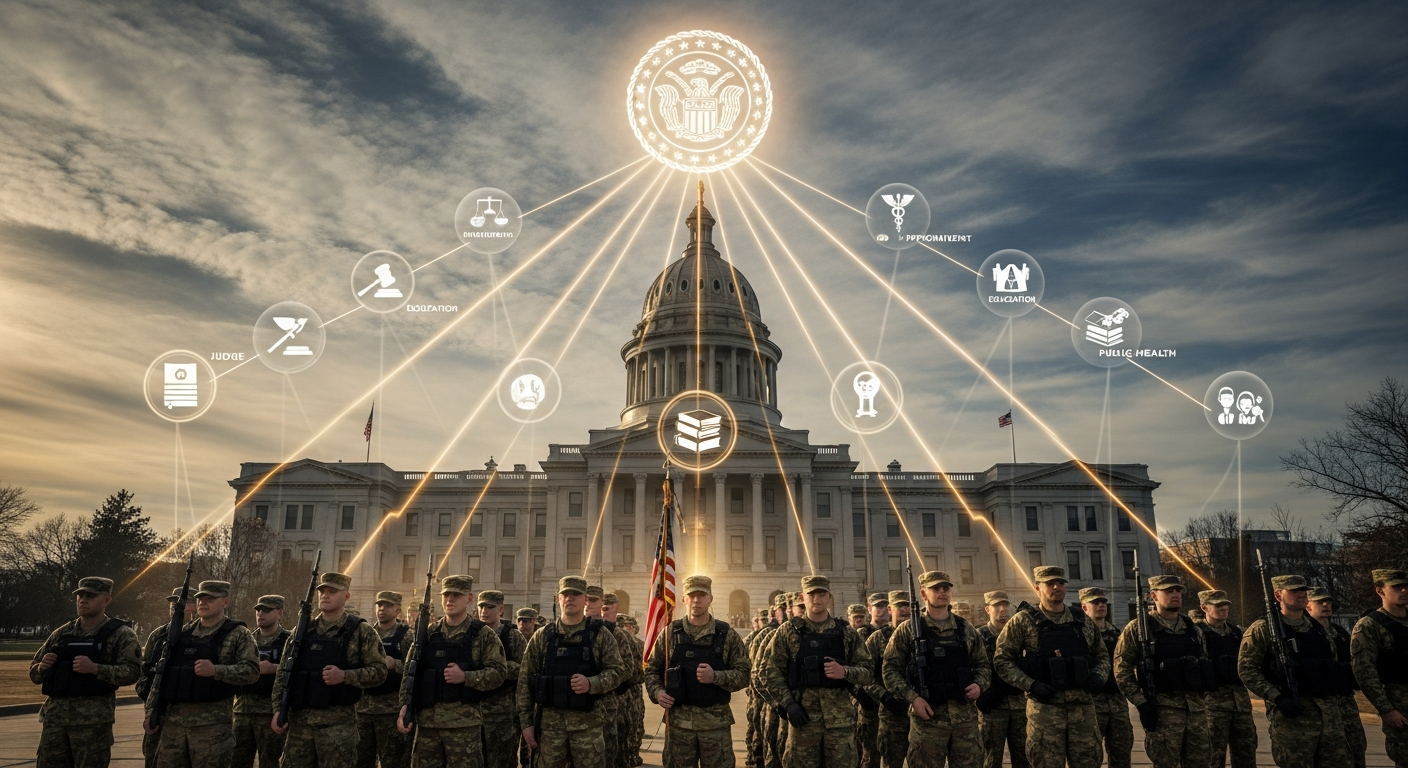
1. National Guard command. Governors control their state's National Guard unless federalized. During emergencies—natural disasters, civil unrest, or even domestic security events—the governor deploys these forces.
2. Senate appointments. In many states, when a U.S. senator dies or resigns, the governor appoints a replacement. These appointments can flip party control of the Senate and affect confirmation of judges, cabinet officials, and military leadership.
3. Presidential pipeline. Four of the last six presidents were governors before becoming president. The governor's mansion is a prime launching pad for the White House.
4. Policy laboratories. States experiment with policies that later go national. Everything from healthcare reform to technology regulation often starts at the state level before Congress considers it.
When you vote for governor, you're not just voting for state budget priorities. You're voting for someone who might appoint your next senator, command military forces in a crisis, and potentially run for president.
Here's the embarrassing truth: local election turnout is abysmal.
In many cities, mayoral elections see turnout under 20%. School board races often have single-digit turnout. State legislative primaries might draw 10-15% of eligible voters. Even gubernatorial elections in non-presidential years struggle to hit 40%.
What does this mean? A tiny minority of voters decides who fills these critical positions. Motivated special interests, party activists, and retirees with time on their hands dominate local elections. Everyone else is too busy, too unaware, or too apathetic.
This creates several problems:
1. Extreme candidates win primaries. When only the most partisan voters show up, the most partisan candidates win. Moderates get filtered out before the general election.
2. Incumbents are invincible. Low turnout means challengers can't build enough support to unseat sitting officials. Bad politicians stay in office for decades.
3. Your preferences don't matter. If you don't vote, politicians don't care about you. They respond to voters. Non-voters are irrelevant to their calculations.
4. The pipeline fills with people you didn't choose. Remember: today's city councilmember is tomorrow's senator. If you didn't vote for them at the local level, you don't get to complain when they're making national security decisions.
"Local elections have abysmal turnout—which means your vote counts more. Use it."
You might be thinking: "Okay, but what does my city council have to do with China?"
Fair question. Here's the connection:
1. Infrastructure security. Local governments manage water systems, power grids, and transportation. These are targets for cyberattacks. Cities make decisions about cybersecurity investment, vendor selection, and emergency preparedness.
2. Law enforcement cooperation. Local police work with FBI and DHS on counterterrorism, counterintelligence, and cybercrime. The officials you elect determine how much your city cooperates with federal security efforts.
3. Foreign investment scrutiny. Cities make decisions about who invests in local real estate, businesses, and infrastructure. Chinese companies have acquired properties near military bases and critical infrastructure. Local officials often greenlight these deals.
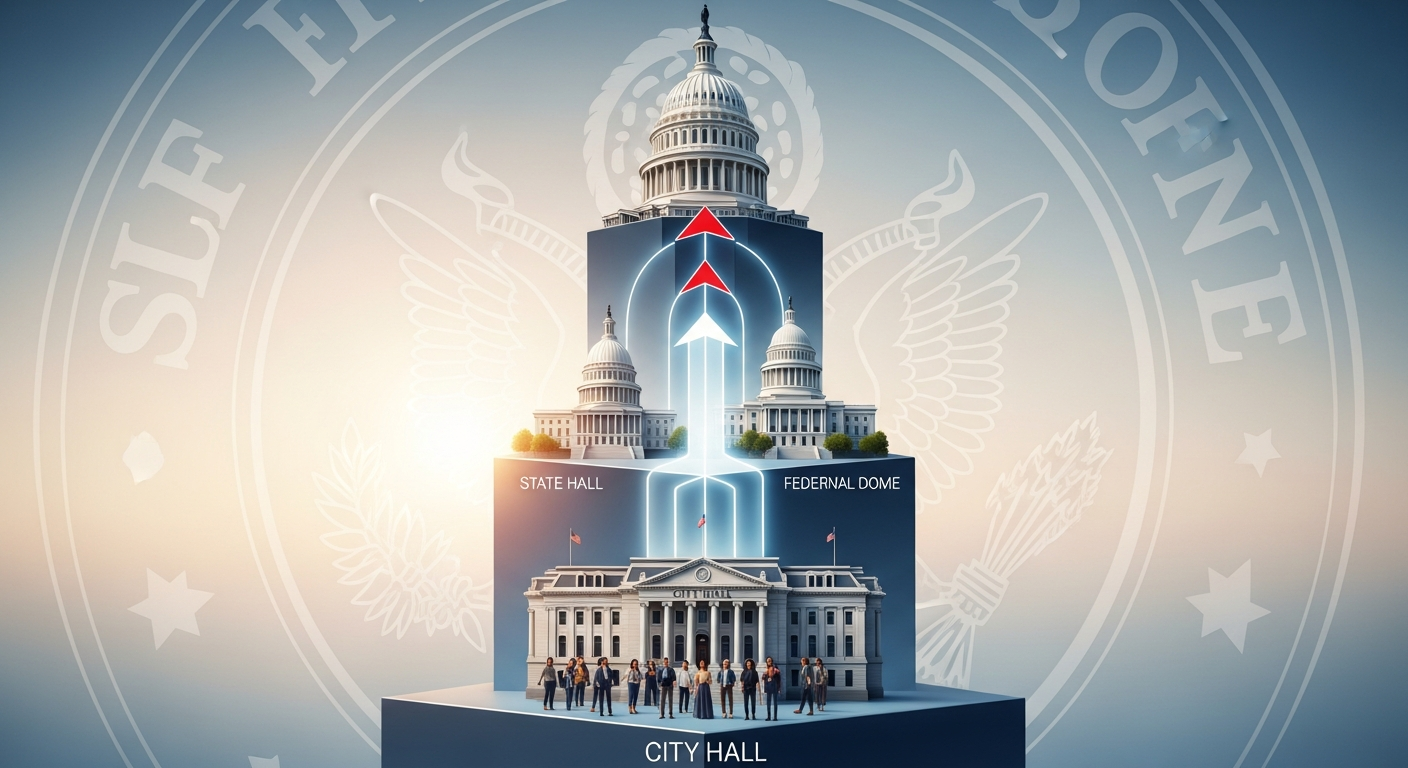
4. The pipeline effect. Your state legislators become your congressional delegation. Your mayors become your governors. Your governors become your presidents. Every level feeds the next.
If you only pay attention to federal races, you're ignoring the ecosystem that produces federal politicians. You're letting others choose who enters the pipeline—and then complaining about the choices at the end.
Ready to stop ignoring local races? Here's your playbook:
1. Find out what's on your ballot. Go to vote.org or your state's election website. Look up every race—federal, state, and local. You might be surprised how many positions you'll be voting for.
2. Research local candidates. It's harder than federal races because there's less media coverage. But local newspapers, candidate websites, and community forums have information. Do the work.
3. Vote in EVERY election. Not just presidential years. Not just generals. Primaries, special elections, local races, school boards—all of them. Put election dates in your calendar.
4. Think about the pipeline. When evaluating candidates, consider: "Could this person move up? Are they building toward higher office? Do I want them representing me at the state or federal level?"
5. Get involved locally. Attend city council meetings. Join local political groups. Volunteer for campaigns. The people who engage locally have outsized influence because so few do it.
If you care about national security, you need to care about local elections. Not because your city council directly sets China policy—but because local elections are the foundation of the political system that does.
The candidates who win at the local level rise to state office. State officials become federal legislators. Federal legislators shape defense budgets, technology policy, and national security strategy. It's all connected.
And because turnout is so low at local levels, your vote has disproportionate impact. In a city council race decided by a few hundred votes, you and your friends could be the margin of victory. That's power most people don't realize they have.
So stop treating local elections as afterthoughts. Research your candidates. Show up for primaries. Vote in every race on the ballot. And remember: you're not just choosing a mayor or a school board member—you're shaping the pipeline that produces America's leadership.
Show up or shut up. Every level matters.
Show Up or Shut Up — the uniform for people who actually participate.
Shop the GearJoin our newsletter for weekly culture war updates, conservative commentary, and truth bombs the woke mob doesn't want you to see.
Want to go deeper? These books cover the ideas behind this article. We earn a small commission if you buy through these links — at no extra cost to you.

Skipped one local election. Lost food trucks, got parking meters everywhere, rent went up $300/month. Local elections matter. I learned the expensive way.
Chinese hackers breached US telecom networks and critical infrastructure. This isn't future war—it's happening now. Here's why elections determine our response.

We hate each other more than we hate our enemies. 74% of Americans feel the country is splitting apart. Our division is China's greatest strategic advantage.
Make a statement at the polls. Every purchase funds more voter guides and tools like this one.
Shop the Cause →Get the exact deadlines, ID rules, and key races for the state where you\'re registered to vote.
See All 50 StatesMost members of Congress started their careers in local or state office. The pathway: school board or city council -> state legislature -> Congress -> Senate -> President. Local office provides name recognition, fundraising networks, legislative experience, and a track record for higher office.
State legislatures draw congressional district boundaries (gerrymandering), set voter ID requirements, determine early voting and mail voting rules, and administer federal elections through Secretaries of State. State governments effectively control who can vote, how easily, and which party gets district advantages.
Yes — city councils handle local issues but also pass resolutions on national issues, allocate funding for civic engagement, and set policies that shape local political culture. More importantly, city council is a common stepping stone to higher office. Your city council vote today could elect a future member of Congress.
A single vote in a local election today affects who runs your city. That person goes on to state legislature, where they draw district maps affecting Congress. Those congressional maps determine which party controls the House. That chain of effects starts with showing up at the ballot box for your local election.
State legislature races have the most outsized impact on national politics because they control redistricting, election administration, and policy areas (education, health, criminal justice) that affect millions. They also have the highest margin for impact — many state legislative districts have fewer than 50,000 voters and are decided by hundreds of votes.