

Your cart is empty
Start shopping to add items to your cart

Registration, Early Voting, Mail Ballots, Election Day — Everything You Need
Taylor Brooks
Conservative Contributor
2026 update (September 26, 2026): Election Day is Tuesday, November 3, 2026. Registration deadlines in many states land in early October, so confirm you're registered today. Then pick your method: early in person or by mail.
Voting shouldn't be complicated, but the rules vary by state, the deadlines sneak up on you, and the process can feel overwhelming if it's your first time — or your first time in a while. This guide breaks down every step of voting in the 2026 midterms, from registration to casting your ballot, so you can show up confident and prepared.
Election Day is November 3, 2026. That's the finish line. But the race starts now, and there are several steps between today and casting your vote. Let's walk through each one.
"The vote is the most powerful instrument ever devised by man for breaking down injustice and destroying the terrible walls which imprison men because they are different from other men." — Lyndon B. Johnson
Before anything else, confirm you're registered to vote at your current address. Registrations get purged for inactivity, address changes, and name changes — sometimes without you knowing. Use our registration check tool to verify your status right now.
Not registered? You need to get that done immediately. Registration deadlines vary by state — some require you to register 30 days before the election, others allow same-day registration. Read our complete registration deadline guide to find your state's cutoff date.
Most states offer online registration through their Secretary of State website. It takes about 5 minutes and requires a state ID or driver's license number. Go to your state page for the direct registration link.
You generally have three options for casting your ballot. Availability depends on your state:
Most states offer early voting — you show up at a designated polling location during a window before Election Day and vote just like you would on November 3. No lines, no Election Day stress. Early voting periods typically run 7-45 days before the election depending on the state. Check your state page for early voting dates and locations.
States with strong early voting: Florida (14 days), Georgia (17 days), Texas (12 days), North Carolina (19 days), Ohio (28 days), Arizona (27 days). If you live in one of these states, take advantage — it's the easiest way to vote.
Every state allows some form of mail-in voting. Some require an excuse (you're out of town, disabled, etc.); others offer no-excuse absentee voting to anyone who requests it. A growing number of states — Colorado, Hawaii, Oregon, Utah, Washington, and California — mail ballots to every registered voter automatically.
To vote by mail:
1. Request your absentee ballot through your state's election office or website (check your state page for the link).
2. Receive your ballot in the mail (usually 2-4 weeks before the election).
3. Fill it out, following all instructions carefully.
4. Return it by mail (postmark deadline varies by state) or drop it at a designated ballot drop box.
Pro tip: Request your mail ballot early and return it early. Mail delays happen, and if your ballot arrives after the deadline, it won't be counted — even if you mailed it on time. Use a drop box if your state offers one to eliminate mail risk entirely.
The classic method. Show up at your assigned polling place on November 3, 2026, and vote in person. Polls are typically open from 6:00 AM to 7:00 PM or 8:00 PM, depending on your state. As long as you're in line by closing time, you have the right to vote — don't let anyone tell you otherwise.
Find your polling place on your state's election website (linked from your state page).
Voter ID requirements vary by state. Some states require a photo ID, some accept non-photo IDs, and some don't require any ID at all. Use our voter ID lookup tool to find out exactly what you need in your state.
When in doubt, bring:
• A valid driver's license or state ID card
• A current utility bill, bank statement, or paycheck with your name and address
• Your voter registration card (if you received one)
• A U.S. passport or military ID (accepted in many states)
Better to bring too much than too little. If you show up without the right ID and your state requires it, you may have to cast a provisional ballot — which may or may not be counted depending on whether you return with proper ID within the verification window.
Don't walk into the voting booth blind. Your ballot will include federal races (Senate, House), state races (governor, attorney general, state legislature), and local races (school board, city council, judges, ballot measures). These down-ballot races matter enormously — they determine your property taxes, school policies, local laws, and judicial appointments.
A week before you vote, look up a sample ballot for your precinct on your state's election website. Research every race. Write down your choices. Bring your notes to the polls — our Senate race guide is a good starting point for the federal races.
Want to see how competitive your state's races are? Check our victory margins tool to understand how much each vote matters where you live.
Once you've cast your ballot — whether early, by mail, or on Election Day — many states let you track your ballot online to confirm it was received and counted. This is especially important for mail-in voters. Check your state page for ballot tracking links.
If you vote in person, you're done. But the work doesn't stop with your vote.
Your vote matters. But your influence matters more. If you can get 5, 10, or 20 people to vote who otherwise wouldn't have, you've multiplied your impact many times over. Here's how:
Text your contacts. Send a message to everyone in your phone: "Are you registered? The deadline is coming up." Include a link to our registration check tool.
Offer rides to the polls. Many people don't vote simply because they don't have transportation. Be the person who drives them.
Post about it. Share your voting experience on social media. Normalizing voting — especially midterms — is how we fix the turnout problem.
Support voter outreach. Donate to ShowUpOrShutUp to help us reach more voters, or grab a shirt or hat from the shop — the "Show Up or Shut Up" tee ($29.99) and hat ($24.99) are conversation starters that fund voter mobilization.
Can I vote if I have a felony conviction? In most states, yes — once you've completed your sentence. Rules vary by state, so check your state page for details.
What if I'm in the military or living overseas? You can vote absentee under the Uniformed and Overseas Citizens Absentee Voting Act (UOCAVA). Request your ballot through the Federal Voting Assistance Program (FVAP.gov).
What if my polling place has long lines? Stay in line. As long as you're in line by the time polls close, you have the right to vote. Bring water, a snack, and patience.
What if I make a mistake on my ballot? You can request a new ballot. Ask a poll worker immediately — they'll help you void the spoiled ballot and issue a new one.
What if someone tries to intimidate me at the polls? Voter intimidation is illegal. Report it to the poll workers, the Election Protection hotline (866-OUR-VOTE), or local law enforcement. You have the right to vote without harassment.
Here's everything you need to do, in order:
☐ Check your registration status
☐ Register or update your registration if needed (visit your state page)
☐ Mark your state's registration deadline on your calendar
☐ Decide how you'll vote: early, mail-in, or Election Day
☐ If mail-in: request your absentee ballot now
☐ Look up a sample ballot and research every race (start with our Senate race guide)
☐ Check voter ID requirements for your state
☐ Vote (early voting, mail ballot, or November 3 at your polling place)
☐ Track your ballot to confirm it was counted
☐ Get at least 5 friends to vote
☐ Donate or buy from the shop to fund voter outreach
Voting is not complicated, but it does require you to take action. Register. Decide how you'll vote. Show up. That's it. The 2026 midterms will shape the country for years — who controls Congress, what laws get passed, who sits on the courts. If you don't vote, you're letting someone else make those decisions for you.
The tools are right here. The information is right here. The only thing missing is you showing up.
Show up or shut up. November 3, 2026. Be there.
Show Up or Shut Up — the uniform for people who actually participate.
Shop the GearJoin our newsletter for weekly culture war updates, conservative commentary, and truth bombs the woke mob doesn't want you to see.
Want to go deeper? These books cover the ideas behind this article. We earn a small commission if you buy through these links — at no extra cost to you.

First time voter? How to avoid looking clueless at the polls. No awkward mistakes, no voter fraud drama, no embarrassment, just results.
First time voting? It’s not as scary as it looks—but there are a few things they don’t teach you in school. From what to bring to what NOT to bring, here’s your no-BS survival guide for election day.
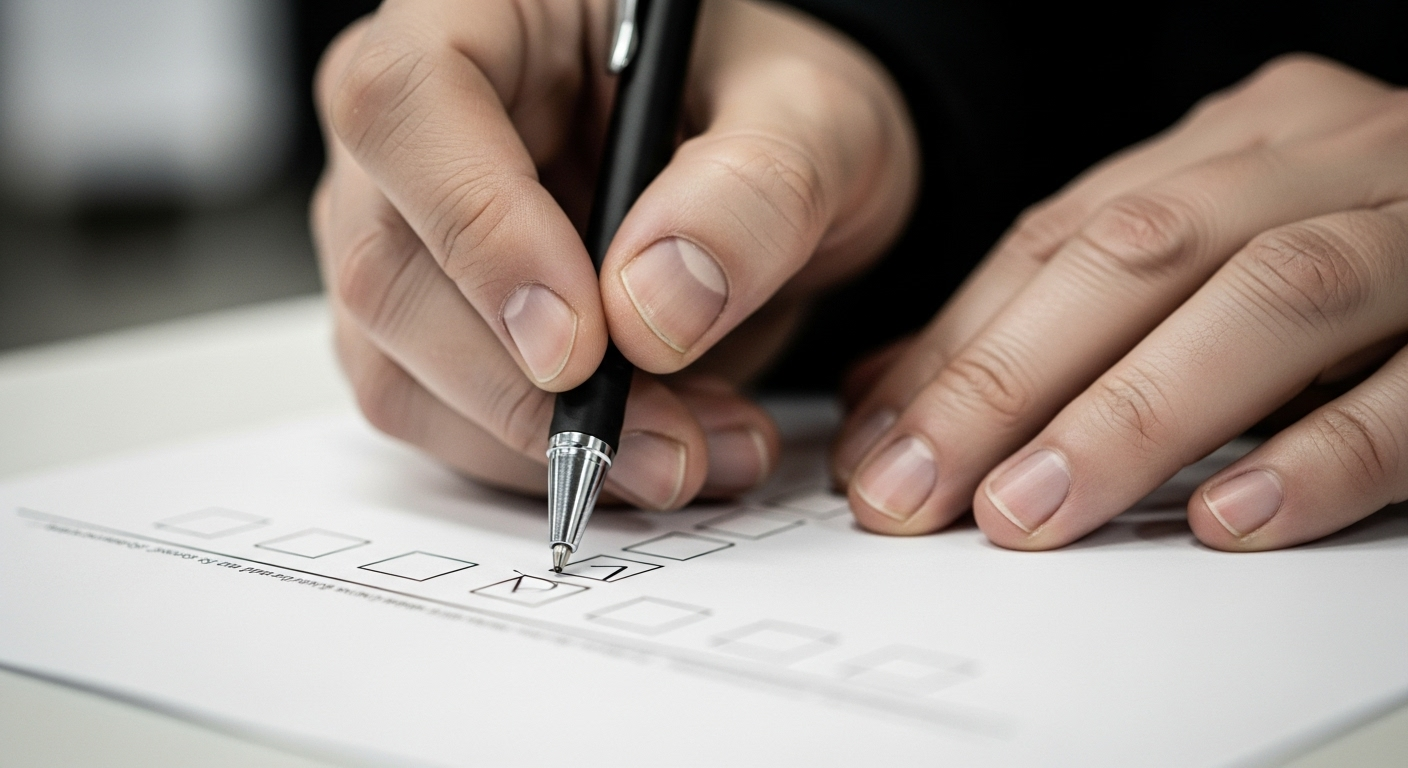
How to vote early in 2026: early voting start dates for battleground states, who offers it, and why voting before Nov 3 beats Election Day lines.
Make a statement at the polls. Every purchase funds more voter guides and tools like this one.
Shop the Cause →Get the exact deadlines, ID rules, and key races for the state where you\'re registered to vote.
See All 50 States