

Your cart is empty
Start shopping to add items to your cart
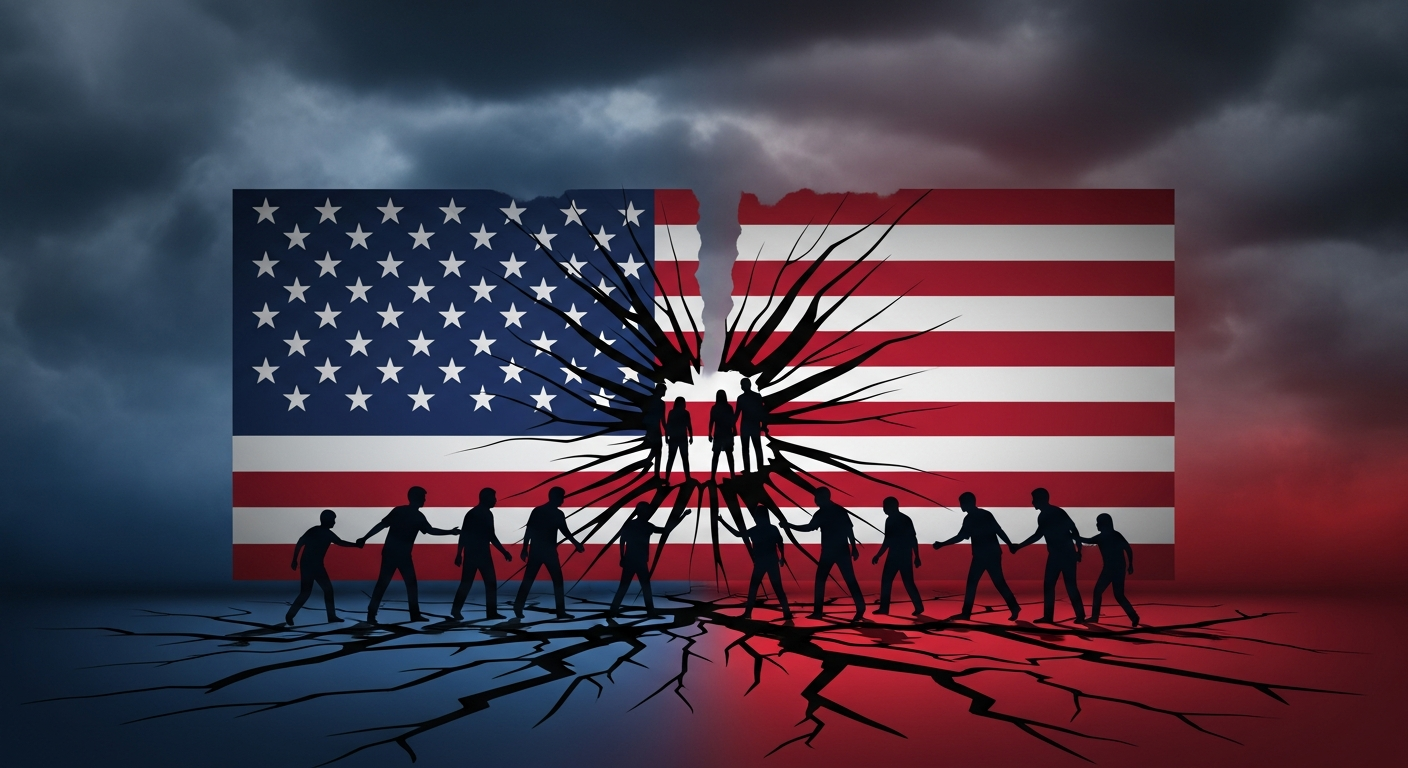
How Political Polarization Makes Us Weaker Against Foreign Threats
Marcus Wright
Conservative Contributor
Here's a stat that should terrify you: 72% of Republicans think Democrats are "immoral." 63% of Democrats feel the same about Republicans.
Not "wrong about policy." Not "misguided." Immoral. As in, fundamentally bad people. As in, enemies of everything good.
Meanwhile, China is hacking our infrastructure, Russia is funding disinformation, and adversaries worldwide are watching us tear ourselves apart. And they're loving it.
A divided America is a weak America. And right now, we're as divided as we've been since the Civil War.
"74% of Americans feel the country is 'splitting apart.'" — NORC 2025 Survey
Political scientists have a term for what's happening: affective polarization. It means we're not just disagreeing on policy anymore. We emotionally despise the other side.
Think about it. When was the last time you had a calm, productive political conversation with someone from the other party? When was the last time you changed your mind—or they changed theirs? When was the last time you thought, "Well, they have a point"?
For most people, the answer is: I can't remember.
According to a 2025 Syracuse University study, Americans are more emotionally divided than at any point in modern history. We're not more ideologically divided—surveys show we actually agree on a lot of policies. But we feel like we're living in different countries with irreconcilable worldviews.
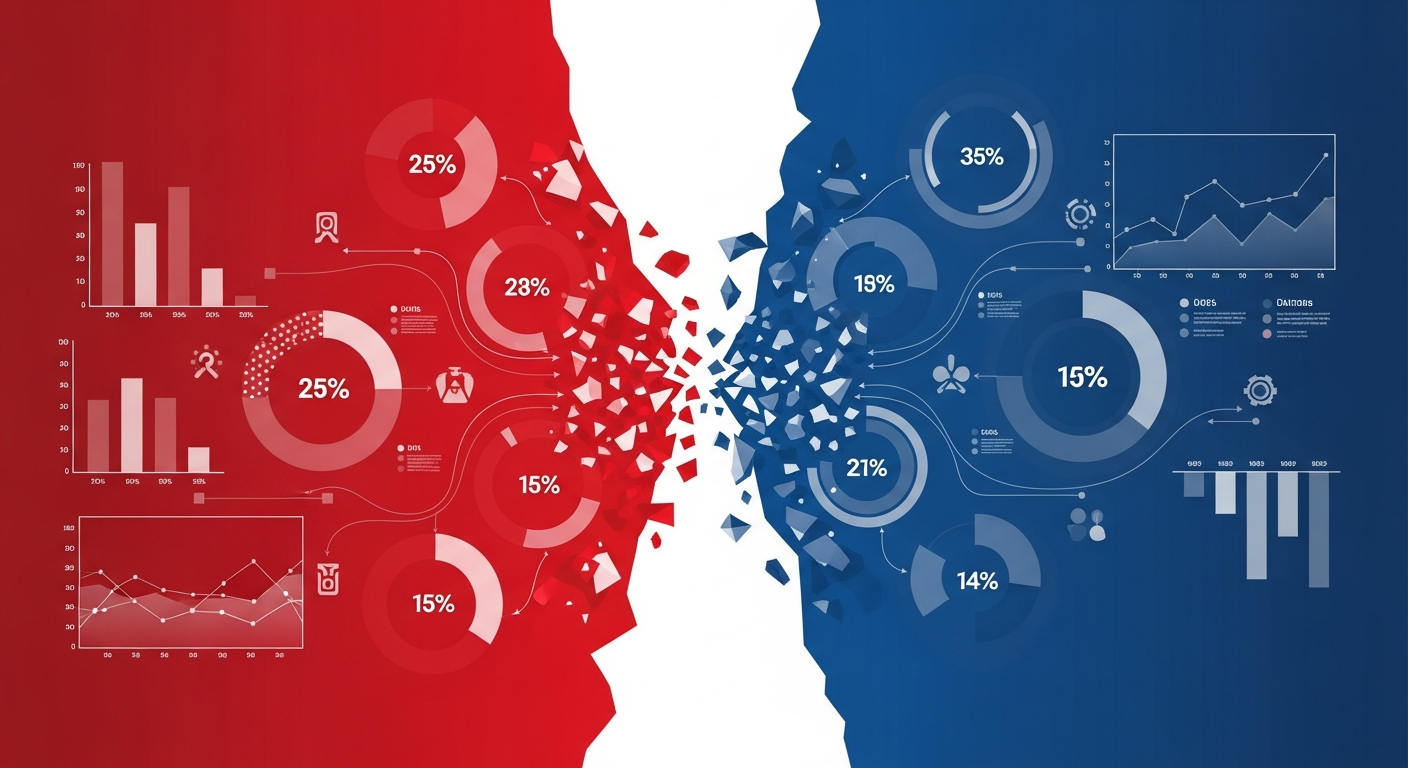
The data is brutal:
• Only 34% identify as moderate—a record low
• 80% say the parties can't agree on basic facts
• 65% feel exhausted just thinking about politics
• Only 1 in 10 think the government represents them well
This isn't healthy disagreement. This is a society turning against itself.
If you were China, what would be your ideal scenario for weakening America?
You could build more aircraft carriers. Expensive. Takes decades. You could develop new weapons systems. Risky. Might not work. You could try to outcompete economically. Possible, but we have advantages.
Or... you could just let Americans destroy themselves from within.
A divided America can't agree on how to respond to threats. A divided America wastes energy fighting itself instead of addressing real challenges. A divided America elects officials based on tribal loyalty rather than competence. A divided America is distracted.
And distraction is exactly what adversaries want.
There's evidence that foreign actors actively fuel our division. Russian troll farms amplified both sides of controversial issues during 2016 and 2020. Chinese state media promotes content designed to inflame American grievances. The goal isn't to make one side win—it's to make sure we keep fighting.
Every hour we spend calling each other fascists and communists is an hour we're not spending on cybersecurity, military readiness, or economic competitiveness. Our enemies know this. Do we?
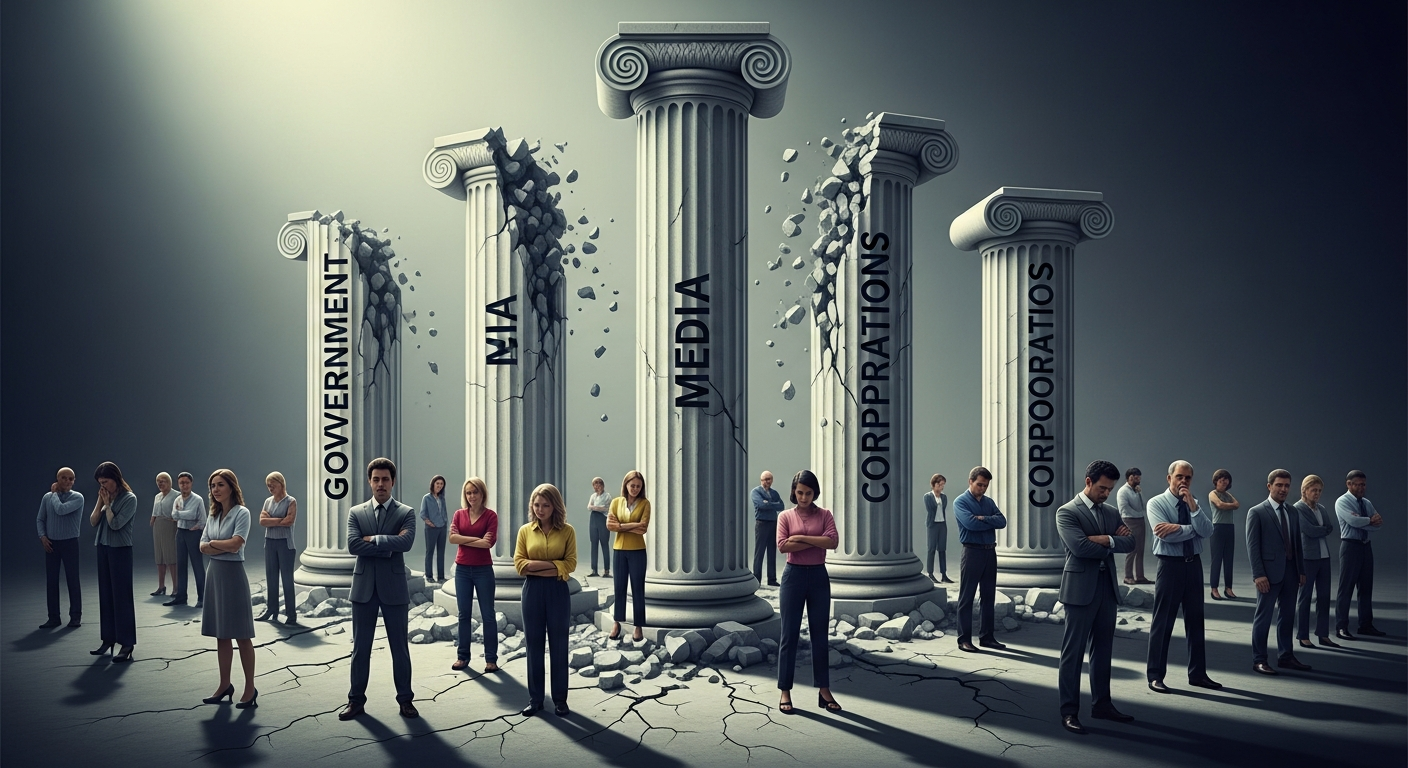
Here's what really kills national power: nobody trusts anybody.
According to NORC's 2025 survey:
• Only 2 in 10 trust government officials to do the right thing
• 7 in 10 believe corporations and wealthy control the government
• 1 in 4 say the country needs a "total overhaul"
• 1 in 10 Americans lack any social support network
When people don't trust institutions, they don't cooperate with them. When they don't cooperate, society fragments. When society fragments, you can't mobilize national resources to address threats—whether those threats are pandemics, cyberattacks, or military conflicts.
Think about World War II. America was able to mobilize because—despite plenty of disagreements—there was a baseline level of trust and unity. Factories converted to wartime production. Citizens bought war bonds. People sacrificed for a common purpose.
Could we do that today? With 74% feeling like the country is splitting apart? With only 10% trusting the government? It's a serious question.
Here's the weird part: Americans aren't as divided on policy as they think.
The Weidenbaum Center found that economy is the top concern for both parties. Healthcare access polls well across the spectrum. Both sides are skeptical of foreign entanglements. Both sides worry about corruption. Both sides distrust big tech.
So why do we feel so divided?
Part of it is media. Algorithms promote outrage because outrage gets clicks. News organizations focus on conflict because conflict sells. Social media creates echo chambers where we only see the worst of the other side.
Part of it is politicians. Candidates win by energizing their base, and the easiest way to energize your base is to demonize the opposition. "The other side isn't just wrong—they're evil" is a more effective campaign message than "reasonable people disagree."
Part of it is us. We choose to engage with content that makes us angry. We choose to unfriend people who disagree. We choose to assume the worst about others. We're not innocent bystanders in our own polarization.
Recognizing the problem is the first step to solving it. And if we don't solve it, we're handing our adversaries exactly what they want.
"A house divided against itself cannot stand." — Abraham Lincoln
Elections can either deepen division or start healing it. It depends on what we demand from candidates.
If we reward politicians who demonize opponents, we get more demonization. If we vote for people who treat the other side as existential enemies, we get more hostility. If we prioritize "owning" the other side over solving problems, problems don't get solved.
Alternatively: we could demand better.
What if we voted for candidates who:
• Criticize policies, not people?
• Acknowledge when the other side has a point?
• Focus on shared problems rather than tribal grievances?
• Prioritize results over rhetoric?
• Build coalitions instead of burning bridges?
These candidates exist. They're just not as loud. They don't get as much media coverage. They don't go viral for sick burns. But they're the ones who actually get things done—and they're the ones who can help rebuild national cohesion.
The 2026 midterms are an opportunity. You can vote for more of the same—more division, more paralysis, more gift-wrapping our weaknesses for foreign adversaries. Or you can vote for people who understand that a strong America requires Americans who can work together.
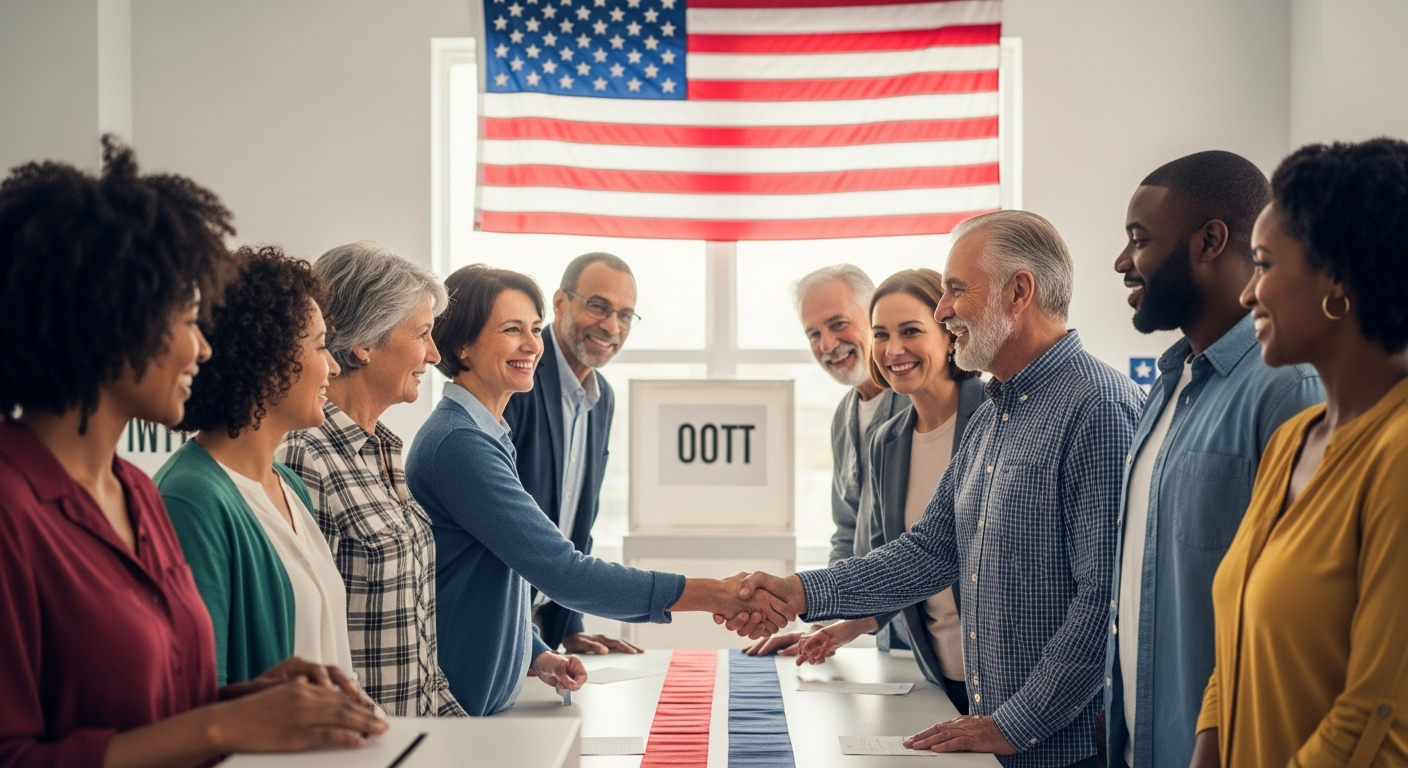
This goes beyond how you vote. Here's a realistic action plan:
1. Stop assuming the worst. The person who disagrees with you probably isn't evil. They probably have different experiences and different information. Curiosity beats contempt.
2. Get off the outrage cycle. If your news consumption makes you angry every day, something's wrong. Seek out sources that inform rather than inflame. Your mental health—and your perspective—will improve.
3. Have actual conversations. Not Twitter arguments. Real conversations with real people who think differently. Listen more than you talk. Try to understand their view, not just defeat it.
4. Vote for problem-solvers. In primaries and generals, look for candidates who build rather than burn. They might be less exciting, but they're more effective.
5. Remember the bigger picture. China is watching. Russia is watching. They're betting on our dysfunction. Don't prove them right.
Internal division isn't just annoying. It's a strategic vulnerability. Our adversaries know it. They exploit it. And every day we spend tearing each other apart is a day we're not preparing for genuine threats.
This doesn't mean we have to agree on everything. Disagreement is healthy. Debate is valuable. But treating half the country as enemies isn't debate—it's self-destruction.
The 2026 elections matter because they'll determine whether we continue the spiral or start reversing it. They'll determine whether Congress can function or remains paralyzed. They'll determine whether we elect leaders who unite or leaders who divide.
The choice is yours. You can keep feeding the polarization machine, or you can demand something better. You can vote for more dysfunction, or you can vote for competence. You can stay home and let the most extreme voices win, or you can show up and be part of the solution.
America's real enemy isn't red or blue. It's the division that weakens us both. And the only way to beat it is together.
Show up or shut up. We're stronger united.
Show Up or Shut Up — the uniform for people who actually participate.
Shop the GearJoin our newsletter for weekly culture war updates, conservative commentary, and truth bombs the woke mob doesn't want you to see.
Want to go deeper? These books cover the ideas behind this article. We earn a small commission if you buy through these links — at no extra cost to you.
Chinese hackers breached US telecom networks and critical infrastructure. This isn't future war—it's happening now. Here's why elections determine our response.
Congressional elections aren't just about domestic policy. Officials you elect will shape defense spending, China policy, and cybersecurity for years to come.
Future presidents and senators start as local officials. State governments control elections and your city council vote today shapes who runs the country.
Make a statement at the polls. Every purchase funds more voter guides and tools like this one.
Shop the Cause →Get the exact deadlines, ID rules, and key races for the state where you\'re registered to vote.
See All 50 StatesPolls show 74% of Americans believe the country is splitting apart. Political polarization has increased sharply since the 1990s, with fewer cross-party friendships, marriages, and media consumption. However, Americans actually agree on many policy issues — the division is often driven by political elites and media amplification.
Adversaries like China and Russia actively exploit U.S. political divisions through disinformation campaigns, social media manipulation, and funding extreme voices on both sides. A divided country is less able to present a unified foreign policy, maintain public support for defense spending, and respond to crises cohesively.
Voting for candidates who commit to bipartisan governance, reject extreme rhetoric, and work across the aisle is one of the most direct ways citizens can reduce division. Primaries are especially important — low-turnout primaries tend to select more extreme candidates who dominate media but represent fewer voters.
Infrastructure investment, veterans' care, disaster relief, and criminal justice reform are areas with broad bipartisan public support. Economic policies that benefit the middle class, anti-corruption measures, and election security reforms also have cross-party appeal. The challenge is electing representatives willing to compromise on these issues.
China views U.S. political division as its greatest strategic advantage. A divided U.S. cannot respond cohesively to Chinese military expansion, technology theft, or trade policy. Chinese state media and social media accounts amplify controversial U.S. cultural debates to deepen divisions and reduce support for assertive foreign policy.